
Spaces That Function as Planned
Landscape Installation in Raleigh for properties converting design plans or addressing incomplete, disconnected outdoor areas
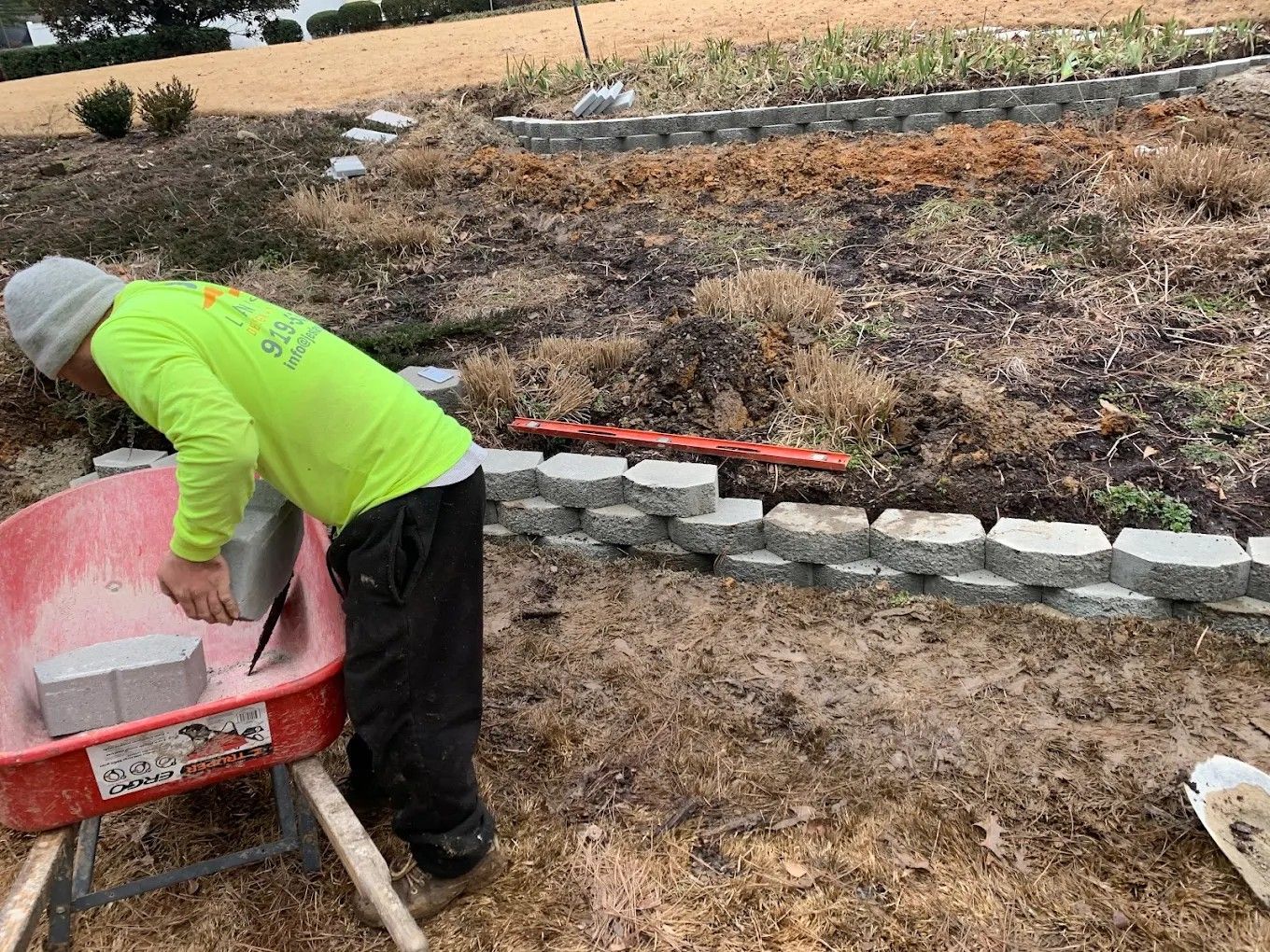
A finished landscape plan doesn't produce usable outdoor space until installation translates layout drawings into constructed beds, established plantings, and integrated hardscape features. Jes Landscaping LLC handles landscape installation in Raleigh, Cary, Apex, and surrounding areas by preparing the site properly before any planting begins—addressing soil compaction, grading for drainage, removing debris or unwanted vegetation, and laying out bed lines and hardscape footprints according to the design. Installation work that skips site preparation often results in plants that struggle to establish, mulch that washes away during heavy rain, and lawn areas with uneven coverage or persistent drainage problems.
The service covers the full installation sequence: excavation and grading where needed, soil amendment for planting areas, placement of trees, shrubs, and perennials at proper depth and spacing, lawn establishment through seeding or sodding, mulch application, and integration with existing landscape features or new hardscape construction. Raleigh's clay soils require organic material incorporation to improve drainage and root penetration, and plant selection must account for summer heat exposure and winter cold tolerance to avoid seasonal dieback.
Request an estimate to review your property's current state, design specifications, and installation requirements for new or upgraded landscaping.
What Changes After Professional Installation Completes
Installation begins with site clearing and rough grading to correct drainage issues or level areas designated for hardscape or lawn use. Planting beds are excavated to appropriate depth, amended with compost or other organic material to address Raleigh's heavy clay, and edged to create defined boundaries between lawn and planted areas. Plants are positioned according to mature size projections and light requirements, with root collars set at grade to prevent rot and spacing that allows air circulation as plants fill in.
Once installation is complete, you'll see defined planting beds with proper mulch depth, newly seeded or sodded lawn areas with starter fertilizer and initial watering schedules in place, and hardscape elements like pathways or patios that connect outdoor zones logically. Plants establish root systems over the first growing season, lawn coverage becomes uniform with consistent watering, and mulched beds suppress weeds while retaining moisture. The landscape looks intentional rather than improvised, with clear transitions between functional areas and plant groupings that provide structure year-round.
Installation includes initial watering to settle soil around roots, mulch coverage to reduce evaporation and weed pressure, and cleanup of debris and excess soil. It doesn't include ongoing maintenance or irrigation system installation unless specified in the project scope, though recommendations for both are provided based on plant needs and property layout.
Answers to Frequent Service Questions
Property owners preparing for landscape installation often want to understand what site preparation involves, how long plants take to establish, and what care is required immediately after completion.
Jes Landscaping LLC completes landscape installations with attention to site-specific conditions, proper plant placement, and integration with existing or planned hardscape features. Schedule a site visit to review your installation timeline, design specifications, and soil preparation needs for your Raleigh property.
What site preparation is necessary before planting?
Site preparation includes removing existing sod or weeds from planting areas, loosening compacted soil, amending clay-heavy soil with organic material, correcting drainage issues through grading or French drain installation, and outlining bed edges and hardscape footprints according to the design.
How does landscape installation handle Raleigh's clay soil?
Clay soil is amended with compost, aged bark, or other organic material to improve drainage and root penetration, mixed to a depth of eight to twelve inches in planting beds, and graded to prevent water from pooling around plant root zones.
What's the difference between seeding and sodding for lawn areas?
Seeding costs less and allows for specific grass variety selection but requires six to eight weeks of consistent watering and limited foot traffic; sodding provides instant coverage and faster establishment but costs more and works best when installed in spring or fall to avoid heat stress.
How long does it take for newly installed plants to establish?
Shrubs and perennials establish functional root systems within one growing season if watered consistently, but reach mature size over two to three years; trees require longer establishment periods with support staking for the first year in some cases.
When should landscape installation be scheduled?
Spring and fall offer the best conditions in Raleigh for plant establishment due to moderate temperatures and more reliable rainfall, though installation is possible year-round with adjusted watering schedules and plant selection.