
Beds That Look Finished and Stay Protected
Mulching in Raleigh for planting beds that need moisture retention, weed suppression, and a polished appearance
Fresh mulch gives planting beds a clean, maintained look while serving functional purposes that support plant health and reduce landscape maintenance. Jes Landscaping LLC provides mulching in Raleigh and throughout the Triangle area for residential and commercial properties where beds have thinned, weeds have taken hold, or seasonal refreshing is overdue. Mulch moderates soil temperature, slows moisture evaporation, and creates a barrier that limits weed seed germination, making it easier to keep beds looking intentional rather than neglected.
The service begins with bed preparation, which includes removing old mulch if it has compacted or decomposed into a dense mat, pulling existing weeds, and defining clean edges between mulch and turf or hardscapes. Mulch is applied at a depth that provides coverage without smothering plant crowns or creating conditions that hold excessive moisture against stems. Around Raleigh, organic mulches such as shredded hardwood or pine bark are common choices because they break down gradually and add organic matter to the soil as they decompose.
Schedule a property walkthrough to evaluate your planting beds and determine appropriate mulch depth, material, and refresh timing.
The Difference Between Fresh and Depleted Mulch
Mulch performs best when it maintains an adequate layer that covers soil without piling against plant stems or tree trunks. As mulch ages, it compacts, loses volume, and allows more weed seeds to reach soil where they germinate. Refreshing mulch restores that protective layer and renews the finished appearance that makes planting beds look intentional rather than abandoned.
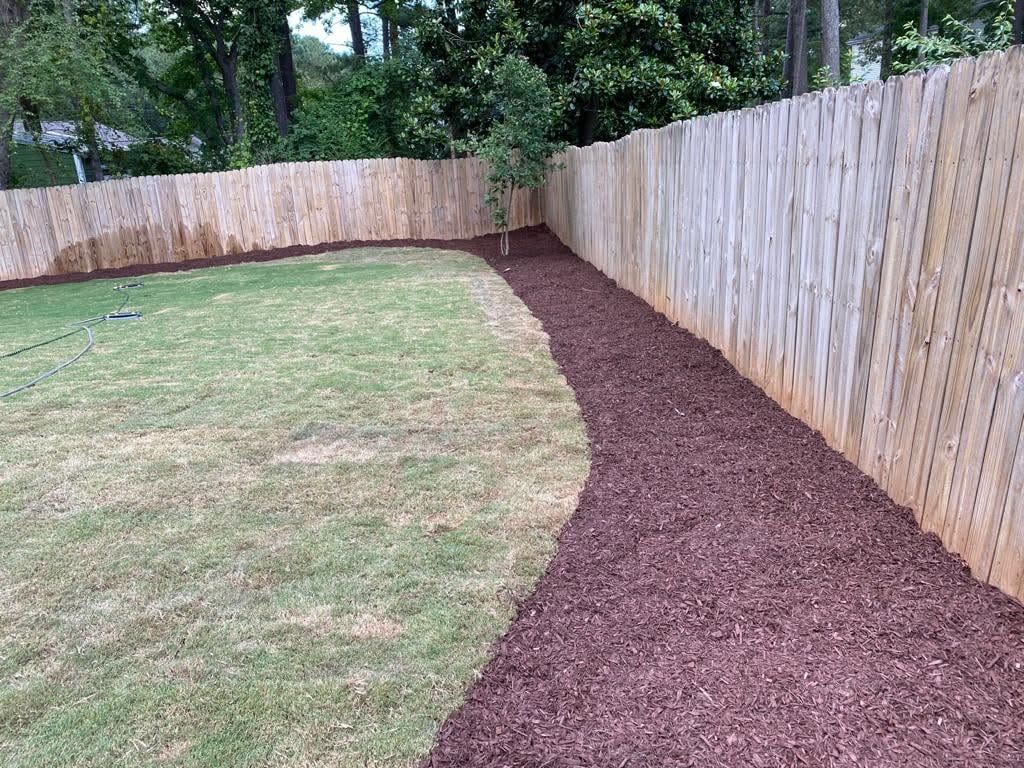
After mulching, you notice beds with uniform color and texture, clearly defined borders, and plants that appear well-maintained rather than crowded by weeds or surrounded by bare soil. Moisture stays in the root zone longer because mulch reduces evaporation, and soil temperature swings become less extreme as the mulch layer insulates against daytime heat and nighttime cooling. Weeds that do emerge are easier to pull because mulch keeps soil looser than exposed, compacted ground.
Mulching frequency depends on material type, weather exposure, and how quickly organic mulch breaks down in Raleigh's climate. Most properties benefit from mulch refresh annually or every other year, with high-visibility areas requiring more frequent attention. Mulch should not be piled against plant stems or tree bark, as excessive depth or poor placement traps moisture and creates conditions that encourage rot or pest activity.
What Property Owners Usually Ask
Property managers and homeowners preparing to refresh planting beds often want to know how mulch supports landscape health and what application practices produce lasting results.
Jes Landscaping LLC applies mulch to residential and commercial planting beds throughout Raleigh and neighboring communities, with attention to bed preparation, clean edges, and proper material placement. Request mulching service to refresh existing beds or finish newly installed landscape areas on your property.
What depth should mulch be applied?
A layer of two to three inches provides effective coverage, while deeper applications can smother roots and shallower layers allow weeds to penetrate and soil to dry out quickly.
How does mulch reduce weed pressure in Raleigh planting beds?
Mulch blocks sunlight from reaching weed seeds in the soil, and the physical barrier makes it harder for seeds to contact soil and germinate even when they land on the surface.
What happens to old mulch during bed preparation?
Compacted or decomposed mulch is either removed or worked into the soil if it has broken down enough to improve soil structure, with fresh mulch applied on top to restore coverage.
When is the best time to refresh mulch?
Spring and fall are common timing windows because beds are being prepared for growing seasons, but mulching can be performed whenever beds look thin or weed pressure increases.
How does mulch affect soil moisture and plant health?
Mulch slows evaporation, which reduces irrigation needs and keeps roots hydrated during dry periods, and as organic mulch decomposes it adds nutrients and improves soil structure over time.