
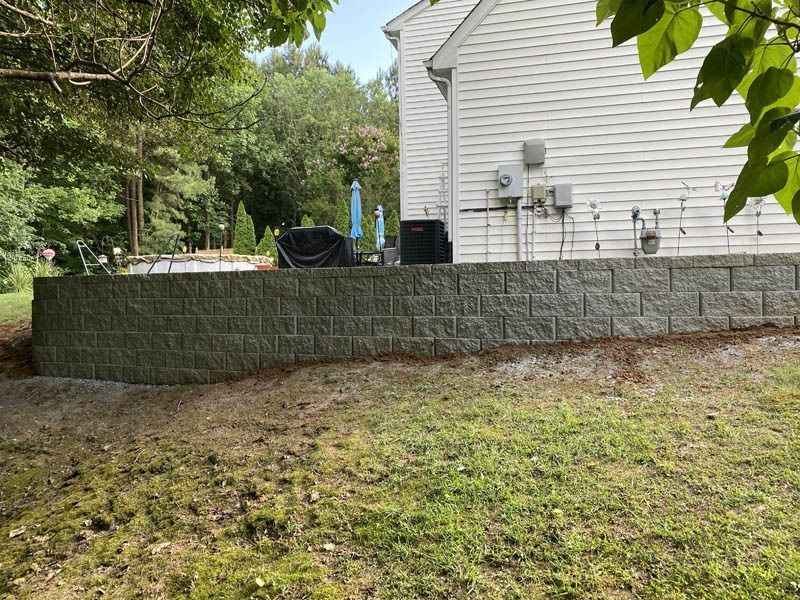
Structure That Organizes Sloped Properties
Retaining Wall Construction in Raleigh for lots with grade changes requiring definition and stability
Properties with elevation changes often lack clear boundaries between usable areas, and erosion gradually moves soil downslope during heavy rain events common in Raleigh, Cary, Apex, and surrounding areas. Jes Landscaping LLC evaluates grade on your lot and plans retaining wall placement to create distinct planting beds, level areas, or transitions between yard zones. The finished wall adds vertical structure that organizes the landscape while addressing slope management in a way that looks intentional rather than purely functional.
Retaining wall construction involves establishing a stable footing, building the wall to the necessary height for the grade change, and coordinating the feature with surrounding plantings, walkways, or patios so everything works together visually. The wall holds soil in place, defines edges where one area ends and another begins, and creates opportunities for terraced planting or level ground where slope previously made outdoor use difficult.
Request an assessment and project estimate to discuss how a retaining wall could address grade challenges on your property.
What Changes After Wall Installation
Construction starts with excavating the wall's footprint, preparing a base that accounts for soil type and load requirements, and building the wall course by course to the planned height. Proper installation includes backfill material that supports the structure and measures to direct water away from the wall rather than allowing pressure to build behind it. The work transforms a sloped area into defined zones with clear vertical separation.
Once the wall is in place, you'll see distinct elevation changes that make sense visually and functionally. Mulch or soil stays within planting beds instead of washing downhill, and you gain level areas suitable for patios, walkways, or additional plantings. The wall's appearance should complement your home's exterior and blend with the landscape's overall design rather than standing out as a purely utilitarian addition.
Retaining walls vary in height, material, and placement based on your lot's topography and what you're trying to accomplish. Shorter walls may create raised planting beds near the home, while taller structures can terrace a steep backyard into multiple usable levels. The design process includes deciding where walls make the most impact, how they connect to existing landscape features, and what height and material best fit the property's character.
Answers to Frequent Service Questions
Retaining wall projects raise questions about placement, construction requirements, and how the wall will function within the broader landscape.
Jes Landscaping LLC constructs retaining walls that address grade challenges specific to Raleigh properties, with planning focused on your lot's topography and how you want to use outdoor spaces. Contact us to schedule a site visit and discuss retaining wall options that fit your landscape and functional needs.
How do you determine where a retaining wall should go?
Placement depends on the slope's steepness, where you need level ground, how the wall integrates with existing features like patios or plantings, and what grade changes make the property more functional for your intended use.
What happens if soil conditions vary across the wall's location?
Construction may require deeper footings in areas with loose or sandy soil, and the base preparation adjusts to ensure the wall remains stable regardless of subsurface variations common in Raleigh-area lots.
How tall can a retaining wall be built?
Wall height depends on structural requirements, load from retained soil, and whether the design calls for a single tall wall or multiple shorter terraced walls that step down the slope in stages.
What prevents a retaining wall from failing over time?
Proper base preparation, backfill material that allows drainage, and construction methods that account for soil pressure and freeze-thaw movement keep the wall stable and intact through seasonal changes and weather events.
Why do some properties need retaining walls while others don't?
Lots with noticeable slopes, erosion patterns, or areas where grade prevents outdoor use benefit from retaining walls, while relatively flat properties typically require them only for design features like raised planting beds.