
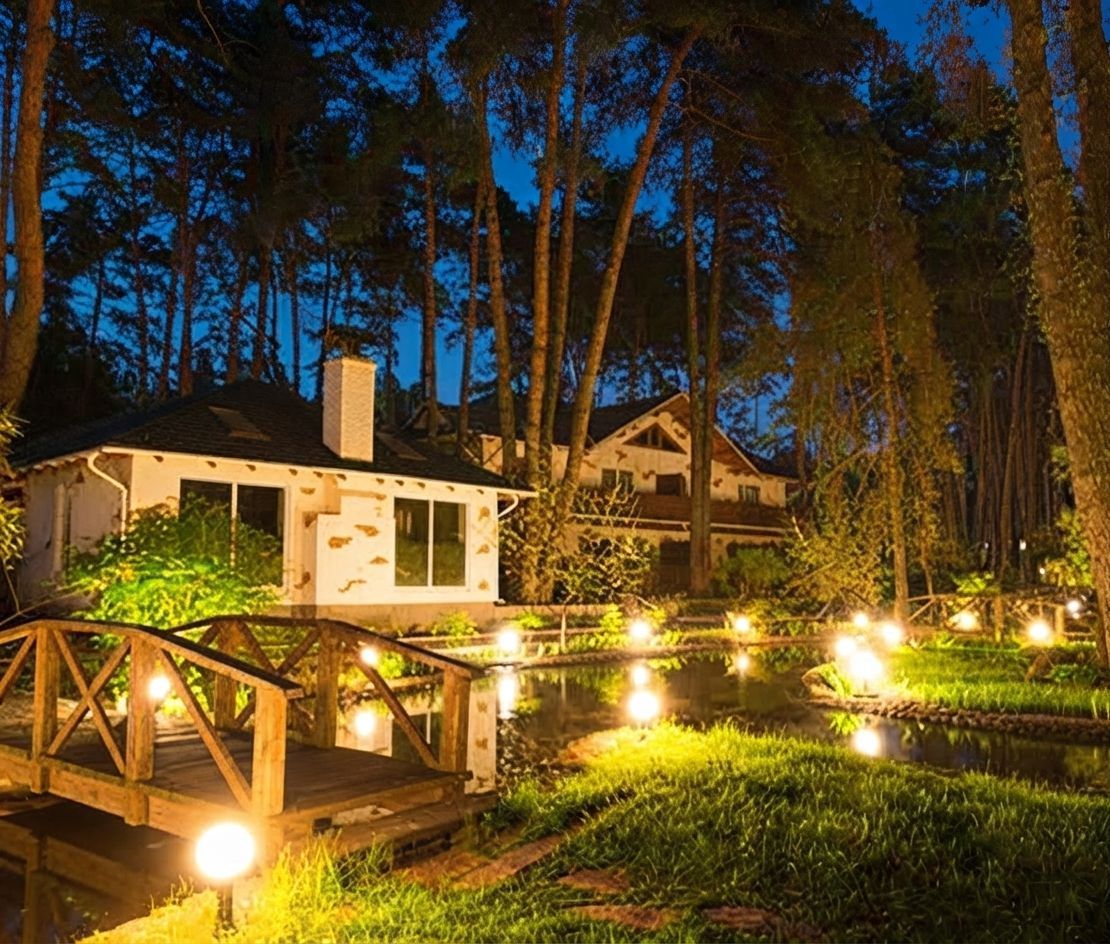
Outdoor Spaces Visible After Dark
Landscape Lighting in Raleigh for properties extending evening use of patios, walkways, and landscape features
Raleigh evenings offer extended outdoor use from spring through fall, but poorly lit yards limit visibility, create safety concerns on pathways and steps, and leave landscape or hardscape features invisible after sunset. Landscape lighting addresses these issues by placing illumination where it supports both function and visual emphasis: along walkways for safe navigation, near gathering areas for usable light levels, and directed at architectural details, plantings, or water features to add depth and interest to the nighttime view. Jes Landscaping LLC installs landscape lighting in Raleigh, Garner, Wake Forest, and surrounding areas by evaluating existing outdoor use patterns, identifying areas that need visibility or accent lighting, and positioning fixtures to avoid glare while highlighting intended features.
This service involves planning fixture placement to coordinate with landscape and hardscape layout, running low-voltage wiring to avoid the cost and permitting required for line-voltage systems, and selecting fixture types based on the area's purpose—path lights for walkways, spotlights for trees or architectural details, and well lights or uplights for planting beds or stone features. Lighting placement must account for plant growth over time so fixtures remain effective as shrubs and trees mature and canopy coverage changes.
Discuss lighting for your existing or planned landscape to review fixture placement, coverage areas, and integration with outdoor living zones.
Why Strategic Illumination Works for Outdoor Spaces
Lighting installation begins with assessing which areas require functional visibility and which features benefit from accent emphasis—pathways, steps, and seating areas need consistent light levels for safety, while specimen plants, stone walls, or architectural elements create focal points when illuminated from below or at angles. Fixture placement follows the landscape layout, with wiring routed beneath mulch or turf to stay concealed and transformers located near power sources with capacity matched to total fixture load.
After installation, you'll notice walkways and steps clearly visible from the house or street without harsh overhead glare, gathering spaces with enough ambient light for conversation and movement, and landscape features like ornamental grasses, tree canopies, or stone columns highlighted to add dimension to the yard at night. Lighting extends usable outdoor time during Raleigh's mild evenings and defines circulation routes so guests navigate the property confidently after dark.
The system typically uses low-voltage LED fixtures for energy efficiency and long bulb life, with timers or photocell controls to automate operation. Maintenance involves occasional fixture cleaning, bulb replacement as needed, and seasonal adjustments if plant growth blocks intended light paths or new landscape elements require additional coverage.
What Property Owners Usually Ask
Homeowners considering landscape lighting often want to understand fixture placement strategies, energy costs, and how lighting integrates with existing or future landscape changes.
Jes Landscaping LLC plans and installs landscape lighting tailored to your property's layout, outdoor use patterns, and feature emphasis priorities. Set up a consultation to walk the property after dark, identify areas needing illumination, and review fixture options suited to your Raleigh landscape.
What areas benefit most from landscape lighting?
Pathways, steps, driveways, and patio edges benefit from functional lighting for visibility and safety; ornamental plantings, water features, stone walls, and architectural details benefit from accent lighting that adds visual interest and depth to the nighttime landscape.
How does fixture placement account for plant growth?
Fixtures are positioned with mature plant size in mind, placed to illuminate trunks or canopies as trees grow, and spaced to remain effective as shrubs fill in, with adjustments made during seasonal maintenance if coverage changes significantly.
What's the difference between low-voltage and line-voltage landscape lighting?
Low-voltage systems run on 12 volts through a transformer, cost less to install, use less energy, and don't require electrical permits in most cases; line-voltage systems run on 120 volts, require licensed electrical work and permitting, and are typically reserved for large commercial properties or areas needing higher light output.
How does landscape lighting affect energy costs in Raleigh?
LED fixtures consume minimal electricity, typically adding ten to twenty dollars monthly to utility bills depending on the number of fixtures and operating hours, with timer or photocell controls preventing unnecessary daytime operation.
When should lighting be installed relative to landscape work?
Lighting is best installed after major landscape or hardscape construction is complete so fixture placement and wiring routes align with final bed layouts, pathways, and plant locations without requiring repositioning later.