
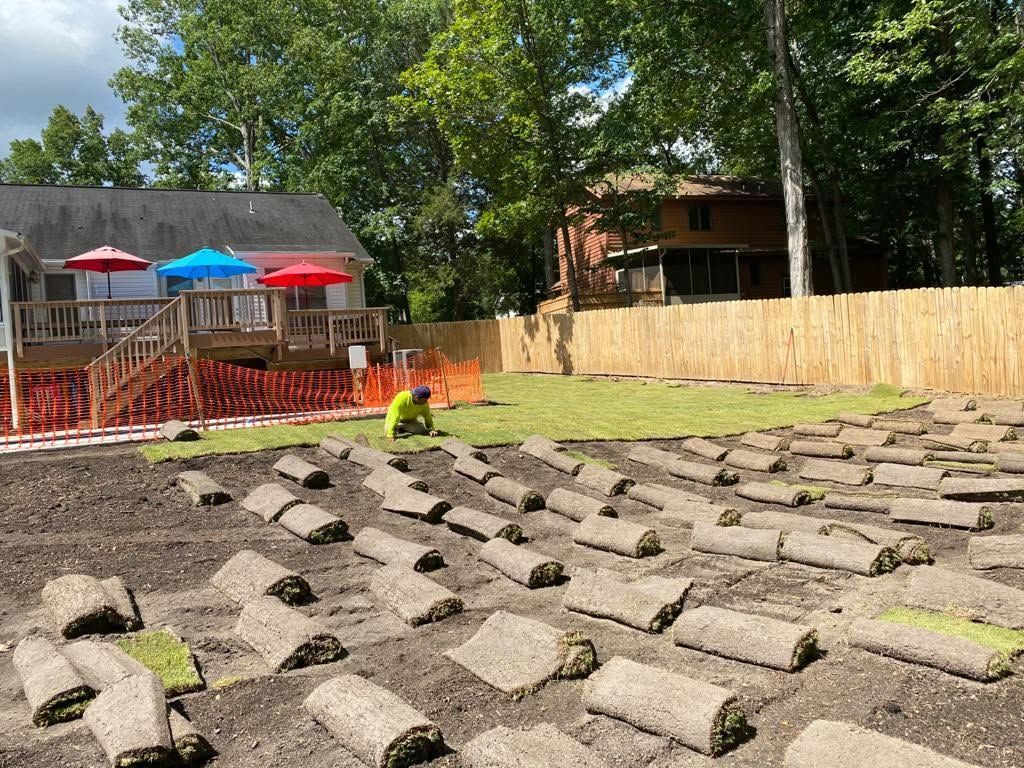
Finished Turf for Immediate Coverage
Sod Installation in Raleigh for bare ground, damaged lawns, or newly graded areas that need established turf quickly
Installing sod provides an immediate turf cover in areas where seeding would take weeks to establish or where erosion and appearance require faster results. You see this need after construction projects leave bare soil, when sections of lawn die from disease or heavy use, or when landscape renovations create new turf areas that must match existing grass. Jes Landscaping LLC handles sod installation in Raleigh, Durham, Wake Forest, and surrounding areas by preparing the site, placing sod pieces tightly together, and ensuring proper contact between roots and soil so the turf can begin establishment without delay.
Site preparation determines whether sod takes root successfully or fails within the first few weeks. The soil must be graded to prevent low spots where water collects, loosened to allow root penetration, and amended if it lacks organic matter or proper drainage. Sod is laid in a staggered pattern to avoid continuous seams, and each piece is pressed firmly against the soil to eliminate air pockets that dry out roots before they anchor.
Arrange an on-site assessment to evaluate soil conditions, drainage, and turf options for your property's specific installation needs.
What Changes After Sod Establishes
Proper installation and follow-up care determine how quickly sod transitions from individual pieces to a unified lawn. Initial watering must keep the root zone moist without saturating the soil, and foot traffic should be avoided until roots penetrate several inches below the sod layer. Grass type, soil temperature, and weather conditions all affect how fast roots anchor and new growth begins.
After installation, you see a finished lawn surface immediately, but true establishment takes two to four weeks as roots grow into the underlying soil and the turf begins producing new shoots. Seams between sod pieces gradually disappear as grass spreads laterally, and the lawn becomes firm underfoot rather than spongy. Newly installed sod requires more frequent irrigation than established turf, with watering reduced gradually as roots deepen and the grass becomes self-sufficient.
Sod installation works best when scheduled during moderate temperatures and when irrigation or rainfall can support the establishment period. Raleigh's spring and fall seasons typically offer favorable conditions, while summer installations require more intensive watering and winter installations may experience slower root development. Matching grass type to sun exposure, use patterns, and existing turf ensures a consistent appearance across the property.
Questions Before Starting Your Project
Homeowners considering sod installation often ask about site requirements, establishment timelines, and care practices that support successful rooting.
Jes Landscaping LLC evaluates soil preparation, drainage, and turf selection for sod installation projects in Raleigh. Call (919) 532-4408 to request an assessment and discuss options for establishing finished turf on your property.
What site preparation is required before sod installation?
The area must be cleared of debris, graded to promote drainage, loosened to a depth of several inches, and leveled so sod pieces sit flat without gaps or overlaps.
How does Raleigh's climate affect sod establishment?
Warm-season sod establishes fastest when soil temperatures remain consistently warm, while cool-season varieties root more effectively during moderate temperatures in spring and fall.
What watering schedule does new sod require?
Daily watering for the first week keeps roots moist, with frequency reduced gradually as the sod anchors and begins drawing moisture from deeper soil layers.
When can I mow newly installed sod?
Mowing should wait until the grass reaches one-third taller than the recommended height for that variety and until roots have anchored firmly enough that sod pieces do not lift when tugged gently.
What are the main causes of sod failure after installation?
Insufficient watering, poor soil contact, compacted or poorly drained soil, and premature foot traffic all prevent roots from establishing and can result in brown patches or lifted edges.